Fibers in, rebar out: simplifying precast concrete by design
What we do

Descargar

Por favor proporcione los siguientes detalles:

Este es un campo requerido.

Este es un campo requerido.

Por favor ingresa un correo electrónico válido.

Offsite construction is built around a simple idea: do more in a controlled factory environment, with fewer steps, less variability and faster assembly on site. But conventional reinforcement can stand in the way of that ambition.

Steel Fiber Reinforced Concrete (SFRC) offers another approach

By adding steel fibers directly during concrete mixing, reinforcement becomes part of the material itself. The result? A simpler precast production process with less dependence on traditional rebar cages.

Why rebar can complicate offsite production

Traditional reinforcement requires steel bars to be cut, bent, tied into cages, positioned and inspected according to individual drawings before the concrete can even be poured.

For precast manufacturers pursuing Design for Manufacture and Assembly (DfMA) criteria, that creates a challenge. DfMA aims to eliminate unnecessary production steps and increase repeatability. Bespoke reinforcement cages add labor, handling and variability to an otherwise industrialized process.

SFRC addresses this differently

Steel fibers are dosed into the concrete during mixing, creating a three-dimensional reinforcing network throughout the concrete. Modern hooked-end high-performance steel fibers are engineered to deliver controlled pull-out resistance, helping redistribute tensile stresses after cracking.


Reinforcement that fits the factory process

The biggest change is not simply what reinforces the concrete. It is where reinforcement enters the production process.


By integrating it during batching and mixing, SFRC can remove multiple conventional steps associated with cutting, bending, assembling and placing reinforcement cages. Production can therefore align more closely with the rhythm of concrete mixing, pouring and demoulding.


For precasters, this can mean:

  • Fewer manual operations
  • Reduced dependence on bespoke cage fabrication
  • Shorter and more repeatable production cycles
  • Easier standardization across component families
  • Greater compatibility with automated factory processes


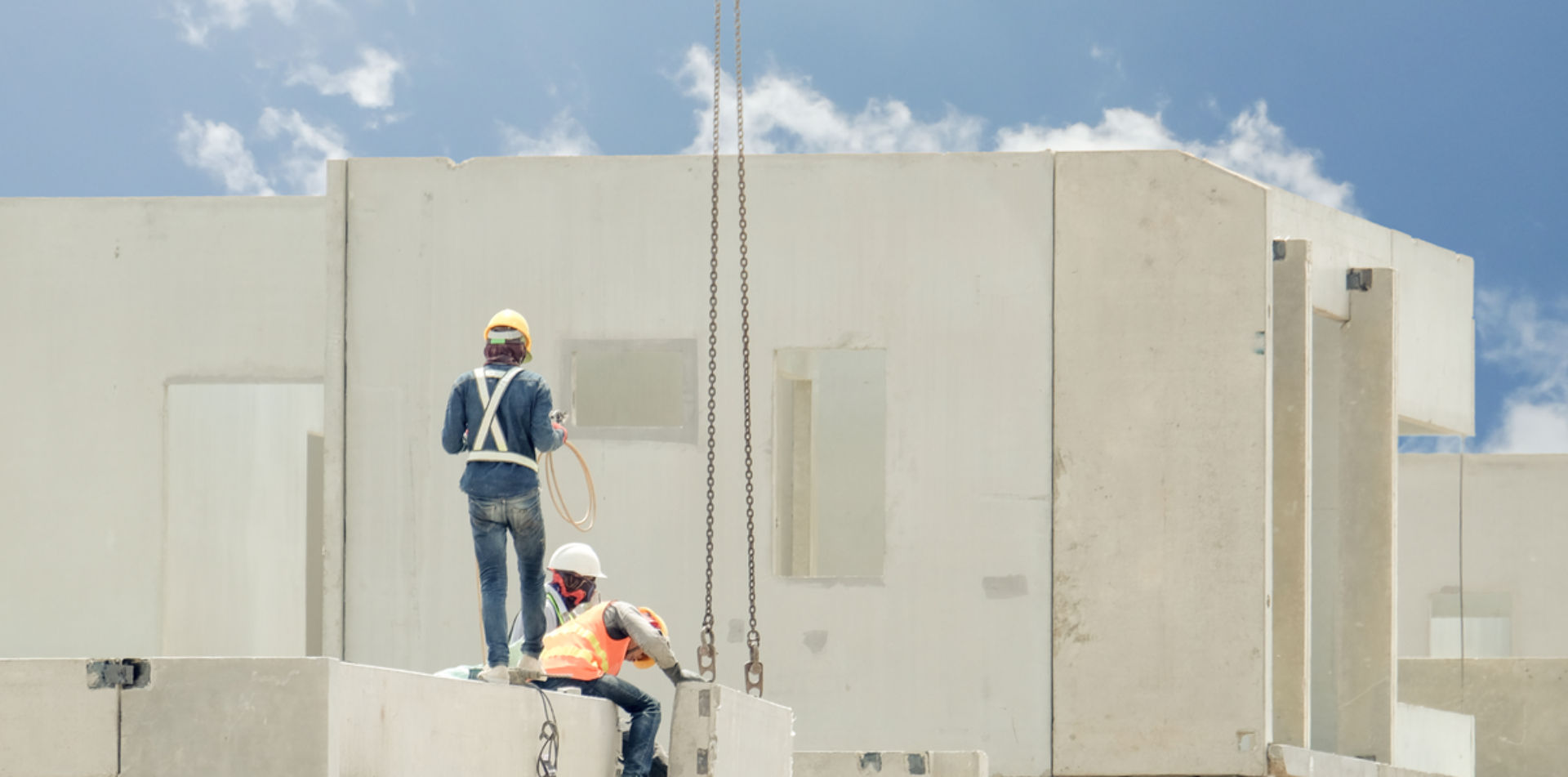
That makes SFRC particularly relevant for industrialized and offsite construction.
From individual components to a standardized system

There is another advantage: standardization.


Because fibers are distributed throughout the concrete rather than positioned at discrete locations, an SFRC specification can potentially be used across a family of precast elements. Precasters can optimize fiber dosage for individual product types or adopt a standardized mix and use local hybrid reinforcement where necessary.


This supports the platform-based thinking behind modern methods of construction (MMC), including volumetric modular and panelized systems. SFRC performance can also be characterized through standardized flexural testing according to EN 14651.

Less complexity, with a sustainability benefit

Simplification can also translate into material efficiency.


Optimized SFRC designs can reduce total steel consumption by up to 30% and embodied carbon by up to 35% in precast and infrastructure applications. These outcomes depend on the particular application and design, but they illustrate why reinforcement design deserves attention when pursuing lower-impact concrete construction.


And not every fiber serves the same structural purpose. Steel fibers are recognized as structural reinforcement under Annex L of Eurocode 2, providing residual tensile strength that can be credited in load-bearing design, whereas synthetic fibers are mainly used for crack control and do not fulfil the same structural role.

Start simple, then scale up

For manufacturers considering SFRC, adopting it does not have to mean redesigning an entire precast portfolio at once.


A practical route is to start with one element family, define the required performance, verify the solution through testing and then expand its use as experience grows.


That is ultimately where SFRC and DfMA come together: removing complexity at material level to make industrialized construction simpler, more repeatable and potentially more resource efficient.


With Bekaert’s Dramix® steel fibers, reinforcement becomes part of the concrete production process itself, helping precast manufacturers simplify today while building towards more efficient construction tomorrow.


Discover how Dramix® steel fiber concrete reinforcement can help simplify your next precast project!


Let’s Build Better Together

At Bekaert, we’re here to support your journey toward sustainable precast concrete solutions. Our Dramix® experts can help you choose the right fiber type and dosage for your specific element — whether it’s a culvert, tank, pipe, or any other precast element. 👉 Contact us today to discuss your next precast project and discover how SFRC can help you achieve watertightness with confidence or have a look at our documentation:

Talk to an expert

Let’s talk about your project and discover what Dramix®, Synmix® and Duomix® fibers can do for you.