Steel fibers in precast infrastructure: A smarter way to reinforce complex elements
What we do

Download

Please provide the following details :

This is a mandatory field

This is a mandatory field

Please enter a valid email (e.g. johnsmith@domain.com)

Precast infrastructure manufacturers are under constant pressure to produce more, faster, and with consistent quality. At the same time, elements are becoming more complex, labor is scarcer, and quality requirements are getting stricter.

So how do you simplify production without compromising structural performance?

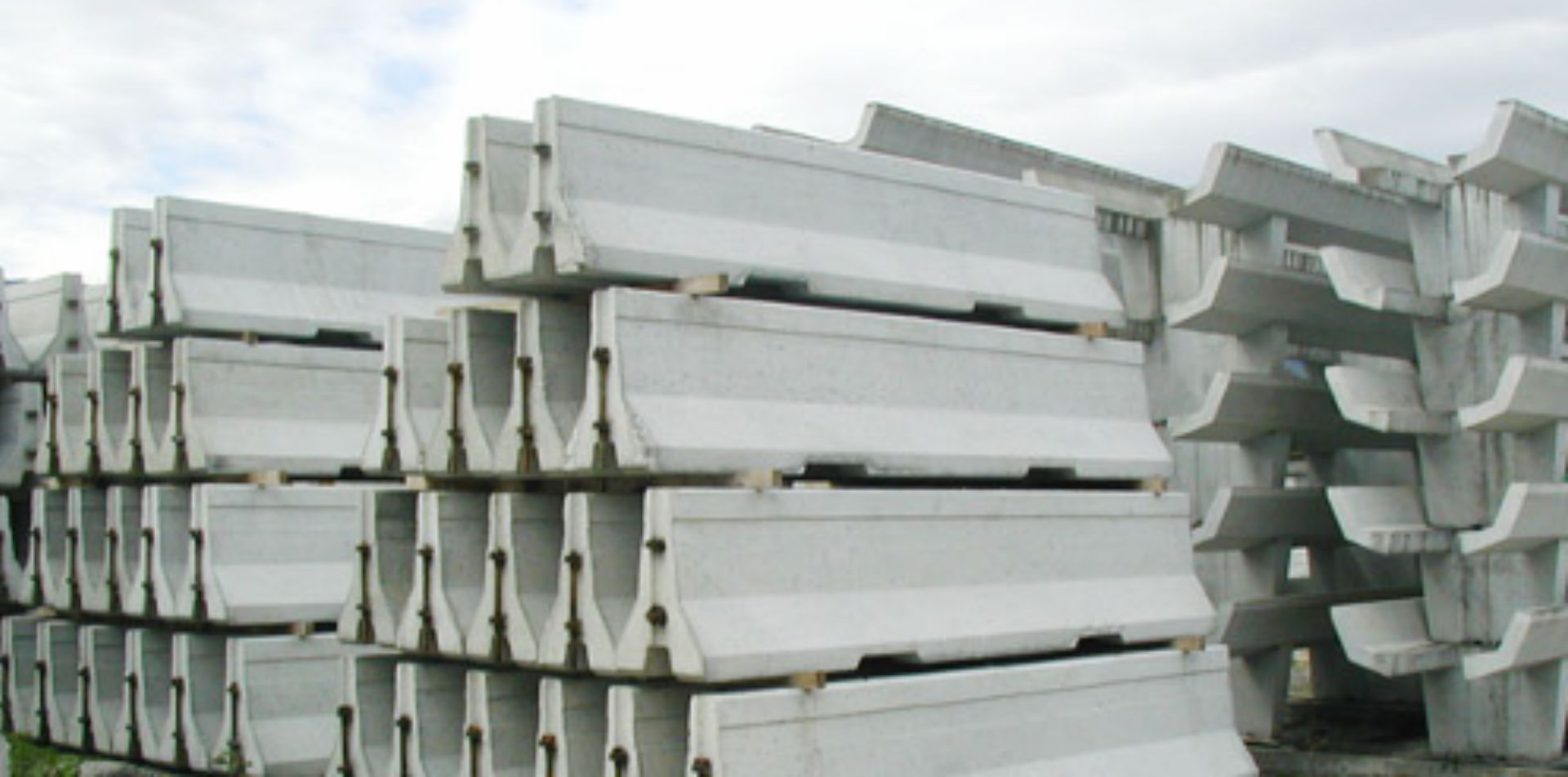
Let’s take a closer look at how steel fiber reinforced concrete, and more specifically Dramix® steel fibers, are helping precast producers optimise demanding infrastructure elements such as crash barriers and U‑drain channels.

Why steel fibers in precast infrastructure?

Steel fibers are already widely used in industrial floors, tunnel segments and mining applications. But today, we’re seeing strong growth in their use for structural transport infrastructure. Why? Because they directly address three recurring challenges in precast production:

  • Complex reinforcement detailing
  • High labor intensity
  • Variability in quality and cycle time

By replacing (or significantly reducing) traditional rebar cages, Dramix® steel fibers allow you to simplify reinforcement designs while still meeting structural and durability requirements.

Crash barriers: Simplifying a complex element

Crash barriers are a perfect example of a precast element that looks simple but isn’t. They need to meet strict requirements for:

  • Impact resistance
  • Crack control
  • Dimensional accuracy

Traditionally, this means dense and complex rebar cages, which makes casting, vibration and quality control more difficult.


What changes with steel fibers?

With Dramix® steel fibers, reinforcement is distributed homogeneously in three dimensions throughout the concrete. That brings immediate benefits:

  • Significantly less time spent on preparing the reinforcement
  • Less congestion in the mould
  • Easier casting and compaction
  • Lower production cost driven by optimized reinforcement

In practice, you often eliminate traditional reinforcement completely or reduce it drastically, which translates directly into less labor and faster cycles.

Added benefit: Anti-spalling robustness

Because fibers are present across the full cross-section, crash barriers benefit from a natural anti-spalling effect. During impact, fibers help keep the concrete intact and prevent local surface fragmentation. You also gain improved post-cracking behavior, which is especially valuable during demoulding, transport and installation.

U-drain channels: Tackling slender geometries 

U-drain channels come with a different kind of challenge. Their slender geometry and thin walls make them highly sensitive to cracking during casting, demoulding and handling and transport. Adding conventional reinforcement in these elements is often difficult, labor-intensive and inconsistent. It also slows down and increases variability from element to element.


How fibers make the difference

By using steel fiber reinforced concrete, reinforcement becomes part of the concrete itself. This results in simpler mould preparation, shorter production cycles and less dependency on skilled reinforcement labor

For precast producers, this means more industrialised and controlled production – exactly what’s needed to scale output while maintaining quality.

Case in point: Bhoj- Morbe Expressway, India

A strong example comes from the Bhoj–Morbe section of the Mumbai–Vadodara Expressway in India. Along a 15.3 km tunnel stretch, the original reinforcement design for crash barriers and drainage channels led to casting delays, handling issues, and labor constraints in the confined space.

The project team addressed this by switching to Dramix® steel fibers, a solution validated by IIT Madras and approved by local authorities. Implemented at full scale, it significantly reduced conventional reinforcement, simplified execution, increased productivity, and doubled construction speed compared to traditional methods.

This case shows how steel fibers can turn complex infrastructure challenges into practical, efficient solutions. Across the precast sector, the focus is increasingly on higher productivity, smarter material use, and reliable quality—areas where solutions like Dramix® steel fibers make a clear difference.

For challenging precast elements such as crash barriers and U-drain channels, steel fibers offer a proven reinforcement alternative that supports both structural performance and production efficiency.

With validated design approaches, established testing methods and a growing list of reference projects, steel fiber reinforced concrete is well positioned to support the next generation of precast infrastructure.


Let’s Build Better Together

At Bekaert, we’re here to support your journey toward sustainable precast concrete solutions. Our Dramix® experts can help you choose the right fiber type and dosage for your specific element — whether it’s a culvert, tank, pipe, or any other precast element. 👉 Contact us today to discuss your next precast project and discover how SFRC can help you achieve watertightness with confidence or have a look at our documentation: