High-performance fibers in concrete: Australian innovations in FRS and segmental linings
What we do

Download

Please provide the following details :

This field is required

This field is required

Please enter valid email (e.g. johnsmith@domain.com)

Concrete has long been the backbone of infrastructure, but its limitations in tensile strength and brittleness have driven innovation. In Australia, high-performance steel fiber reinforced concrete (SFRC) is reshaping tunnel construction—delivering enhanced structural performance, sustainability, and cost-efficiency.

Reinventing tunnel linings with steel fibers

Traditional tunnel linings rely on steel bars or mesh, requiring complex installation and limiting design flexibility. SFRC introduces a composite material where steel fibers are uniformly distributed throughout the concrete mix, forming a three-dimensional reinforcement network that:

  • Distributes stresses across the structure
  • Bridges cracks as they form
  • Enhances ductility and post-crack performance
  • Simplifies construction by eliminating reinforcement cages

Advanced fiber types such as Dramix® 4D 80/60 BGP, with tensile strengths up to 2200 MPa, represent a leap forward in fiber technology—offering improved pull-out resistance and crack control at both service and ultimate limit states.
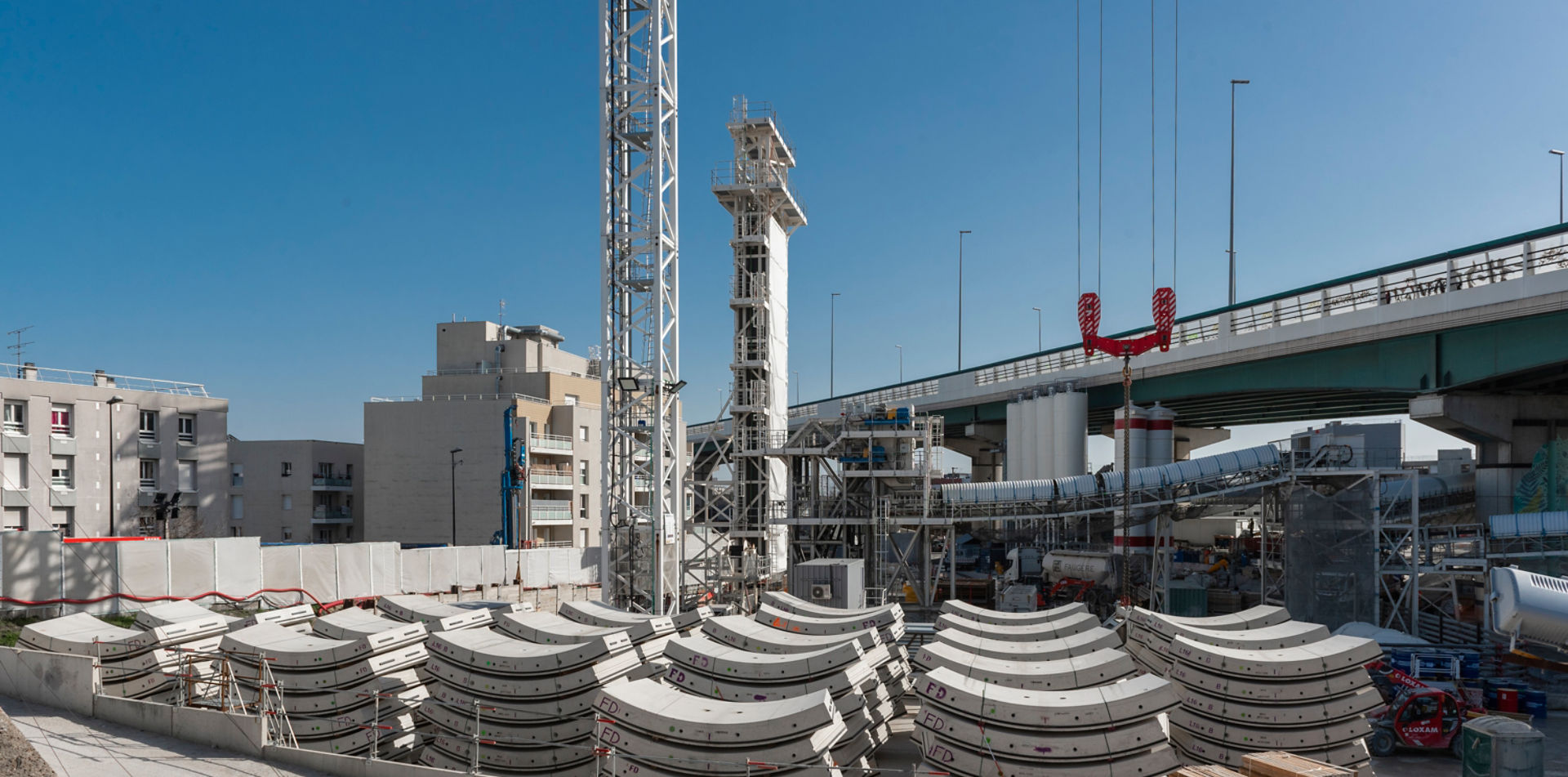
Case study 1: M4–M8 link tunnels – Shotcrete application

Sydney’s WestConnex project pioneered the use of high-performance steel fibers in sprayed concrete linings. Key outcomes included:

  • 6–7× greater load-bearing capacity than conventional design predictions
  • 15% reduction in lining thickness (from 105 mm to 90 mm)
  • 27,000 m³ less shotcrete used, saving 33,000 tons of CO₂e
  • $11 million in cost savings
  • 9,000 fewer heavy vehicle movements on Sydney roads

These results were validated through large-scale field testing, where hydraulic pressure bags loaded shotcrete panels to failure. The tests confirmed the presence of compressive membrane action (CMA), a mechanism often overlooked in conventional linear-elastic design.

Case study 2: TBM segment joint design – Sydney Metro

In deep tunnel sections of the Sydney Metro, segment joints faced axial forces up to 4000 kN/m with 30 mm eccentricity. The design team employed:

  • Non-linear stress analysis using ATENA software
  • Verification assisted by testing on full-scale joint specimens
  • High-performance fibers (Dramix® 4D 80/60 BGP) to eliminate conventional reinforcement

The analysis revealed that traditional elastic methods underestimated joint capacity by 4–5×. Testing confirmed that fiber-reinforced joints could withstand extreme loads without bursting or splitting failures, enabling a 15% reduction in segment thickness.

Why this matters for future construction

The Australian experience demonstrates that high-performance SFRC can:

  • Reduce construction time by eliminating reinforcement placement
  • Improve safety by minimizing labor-intensive tasks at height
  • Lower carbon footprint through reduced material usage
  • Enable thinner designs without compromising strength
  • Deliver cost savings across the project lifecycle

The future of fiber-reinforced concrete

As fiber technology continues to evolve, we are seeing:

  • Higher tensile strengths (up to 2200 MPa)
  • Enhanced ductility and toughness
  • Better crack control at both SLS and ULS
  • Expanding applications beyond tunnels to buildings and infrastructure

By integrating advanced modelling techniques and rigorous testing, engineers can unlock the full potential of SFRC—delivering safer, more sustainable, and resilient infrastructure solutions.